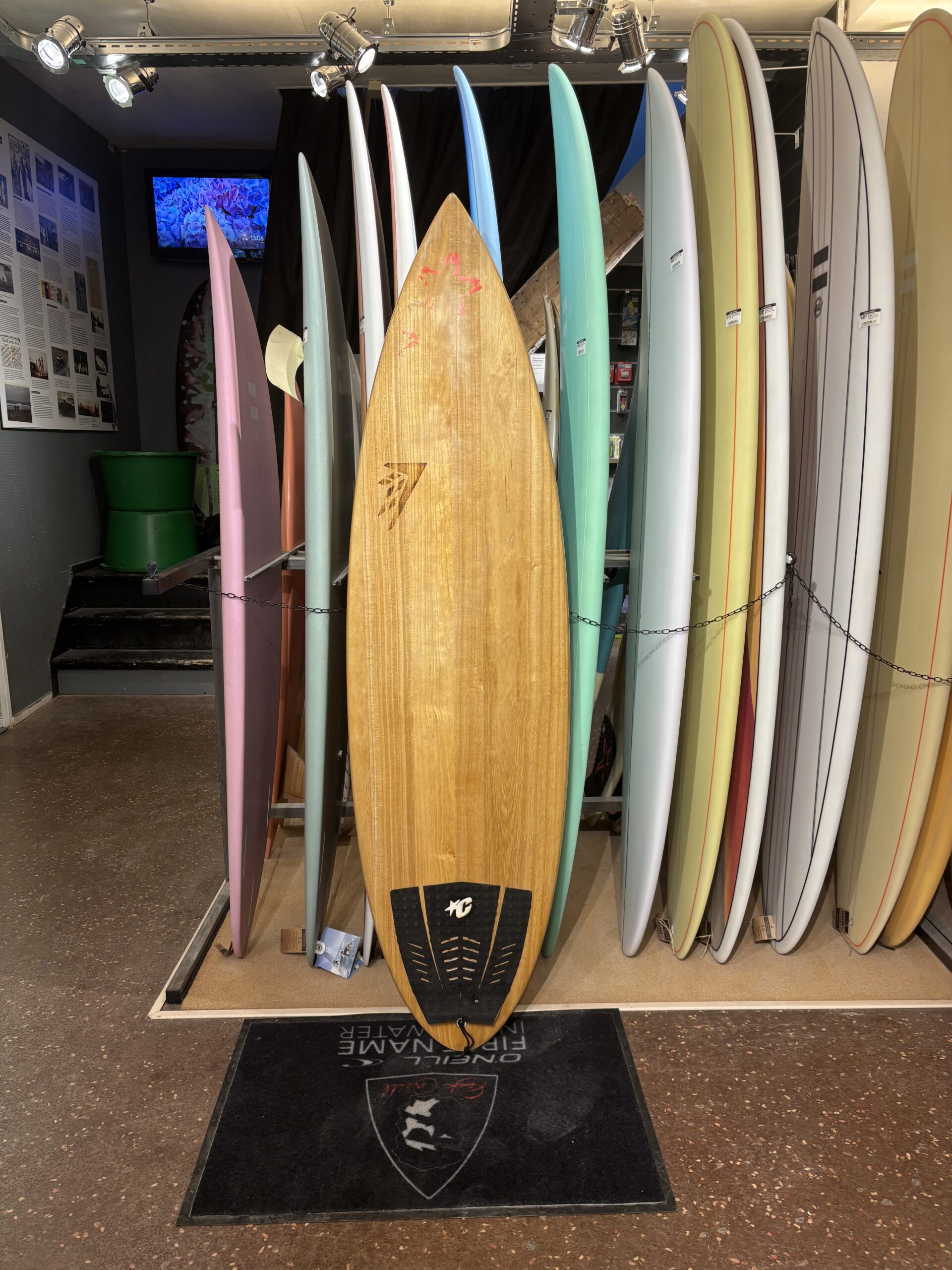
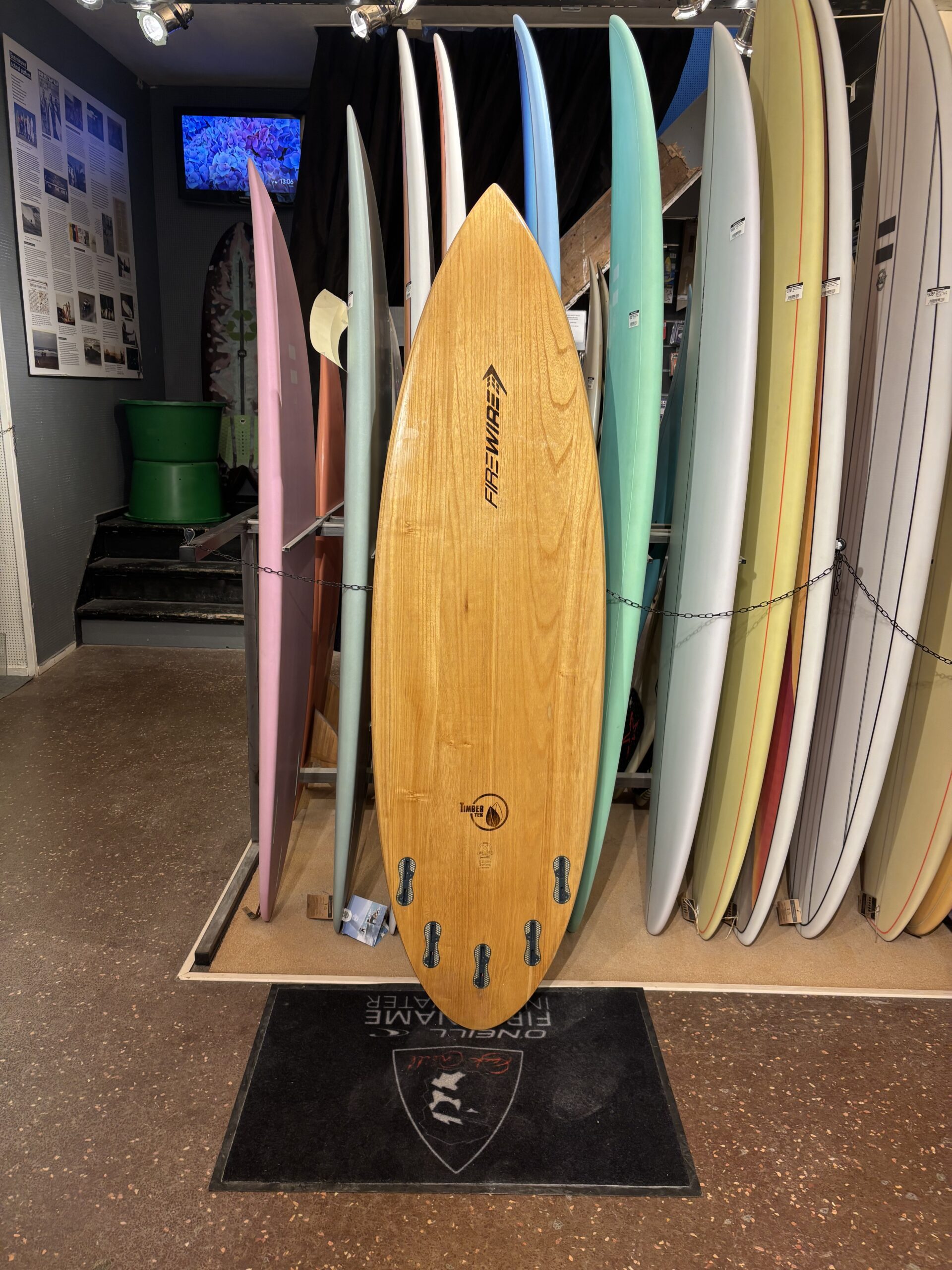
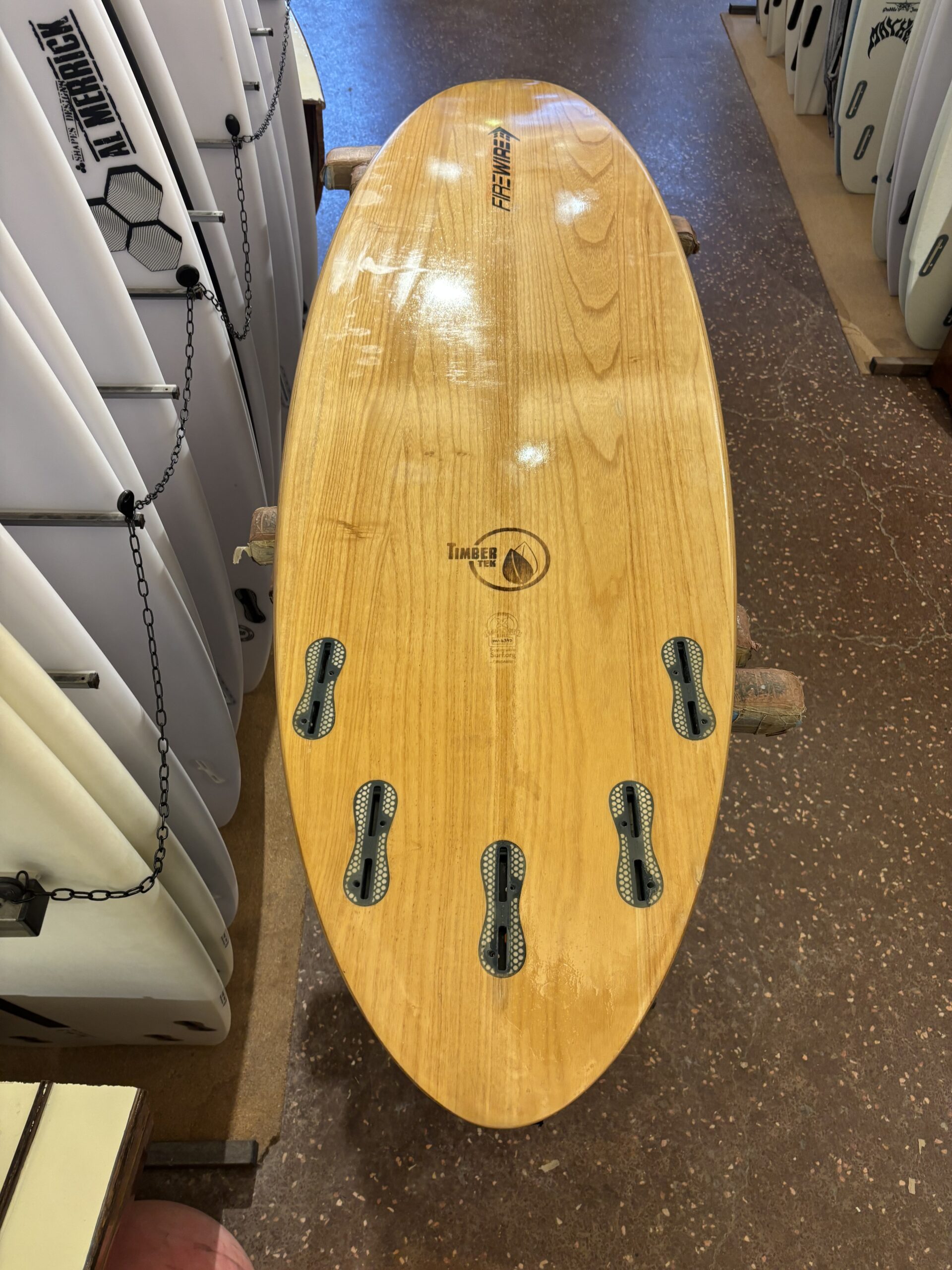
Firewire Unibrow – 6’0 – 19 3/4 – 2 5/8 – 33L – Lightly USED

425.00

What people are saying about it:

I think the real highlight of this board is the deep single to double concave. That type of bottom contour in my opinion, gives you tremendous speed, but controlled speed, and doesn’t stick to the wave face like a single concave board. Combine that with a board that’s wide point is rear of center, and you have a perfect board for the rear footed surfer. Dan Mann is a genius!” – Sean Hanley on YouTube

Catching waves by paddling or by the quick tail push down is easier than any other board I’ve used its size… Turns both frontside and backside were sharp and had no problems pushing it on rail… Most impressive however is the instant and sustained speed.” – user Jarendell on firewiresurfboards.com

My first observations are that the board feels much more like a performance shortboard. It turns easier and quicker… seems primed for rail to rail surfing. The round tail means you get plenty of release and encourages a different approach to riding a fish or hybrid. You don’t have to be so heavy on the back foot and it enables you to surf more naturally, even gracefully.” – Bradley Hook on surfd.com

Some things about the Unibrow I knew, and some were unexpected. The first surprise was on the paddle-out: this board is zippy! A combination of the narrow deck and of streamlined profile allow you to propel forward easily. Duck diving is really good, too: the board is not very buoyant and doesn’t offer a lot of surface exposed beyond your body, so it isn’t easily torn out of your hands.” – mrgazz.com

The Unibrow is a very high-performance shortboard that doesn’t feel too ‘bulky’ in good surf when you can ride something other than a groveler.” – Daily Stoke

In stock

Description

Designer Dan Mann explains, “The UNIBROW has roots in a design I’ve been riding as my regular short board, mixed with what I’ve learned from designing and riding the Dominator, Sweet Potato and Potato-Nator. The outline curve is compressed from a regular shortboard without sacrificing the width needed to maximize paddling and planing speed.

The goal was to design a very high-performance shortboard that didn’t feel too ‘bulky’ in good surf when you can ride something other than a groveler. The rail profile is dropped and very sensitive, especially through the tail. The bottom has an aggressive single concave that starts in the nose, carries through the deep spot forward of the fins and splits into a subtle double concave that then directs the water flow to the inside of the front fins”.’

Brand

Firewire Surfboards

Firewire believes that refinements to the shape of today’s modern surfboards can only produce incremental performance benefits. Exponential improvements in performance require the ongoing development of new materials and construction methods which, in turn, will fuel new design opportunities. Slater Designs, Firewire, FDS, Machado, Mannkine, Wingnut, Tomo, Board Types, Performance, Groveler, Everyday, Crossover, Step Up, Longboards, Kiteboards, Technology, Helium Technology, TimberTEK Technology, Linear Flex Technology, Kiteboard.

THERE ARE MANY ASPECTS TO SURFBOARD SELECTION THESE ARE THE POINTS TO CONSIDER

LENGTH

Typically surfboards are measured in inches. The length is measured from the nose to the tail. Choosing the length of the surfboard is dependant on your size (weight, height), board type and waves conditions you wish to use the board for.

WIDTH

The widest point of the surfboard is measured from rail to rail. Generally the wider the surfboard the more stable the board, while a board with smaller width maintains better speed and performance.

BOARD THICKNESS

Surfboard thickness is measured from the top deck to the bottom. The thickness again has a bearing on the board’s performance. Professional surfers will tend to go for the thinner boards as they are lighter and offer better performance.The thicker boards are stronger and because there is more foam under the surfer the boards are more stable.

ROCKER

The bottom curve of a surfboard. Generally the more rocker the surfboard has the more loose (manoeuvrable) the surfboard will be. Where the flatter rocker surfboards will be faster, although they will lack the looseness. The nose is the tip of the surfboard, the nose can vary in shapes and size. Basically the thinner the nose the more response the board will perform, while wider noses are better for stabilization.

STRINGER

Used to increase the strength of a surfboard, a stringer (normally made from wood) runs down the length of a surfboards (typically in the centre of the board from the tip of the nose to the tail). Boards built with Epoxy, Carbon Fibre and soft boards generally don’t have stringers.

FINS

Generally heavier surfers require larger fins to hold the waves better. Although if you prefer to ride a looser (less hold in the waves), smaller fins would be a better option.

FIN CONSIDERATIONS

Fin configurations have an effect on the ways your surfboards perform. The following are some of the more common fin configurations.

SINGLE FIN

The single fin was the original fin configuration for surfboards. Based on the idea of the sailboat keel. Single fins are added stabilization and control on the powerful, larger waves, although lack manoeuvrability

TWIN FIN

Are great for small waves, being fast and manoeuvrable, but when put into tight spots on larger waves, they become hard to control. Popular with Fish surfboards.

THRUSTER 3 FIN

Widely recognized as the standard fin configuration, the thruster answers the shortcomings of the single fin and the twin fins configurations. The thrusters give you stabilization, control and manoeuvrability in all types of surfing conditions. This concept was the brainchild of Australia’s Simon Anderson

QUADS 4 FINS

With four fins in the water, Quads boasts an extraordinary amount of holding power in larger surf. You may think that having four fins would sacrifice speed by creating more drag, but this is not the case. The both sets of fins are working together on the rail, which makers believe they creates less drag than a board with a centre fin. The manoeuvrability isn’t sacrificed either, with fins directly under your back foot, the quads are very responsive.

KEEL

Similar setup to the Twin Fin, although smaller (low profile) fins are generally placed wider (closer to the rails) on the surfboard. Popular with Fish and Egg / Retro surfboards.
Heeft u hulp nodig bij uw aankoop? Neem dan gerust contact met ons op +3170 201 5153 info@noordzeeboardstore.nl

Contact formulier

     
    0
      0
      Your Cart
      Your cart is empty